A practical guide to warehouse identification, labelling, signage and floor marking
A picker pauses at the end of an aisle because two location labels use different formats. A forklift operator circles back because the staging area is not clearly marked. A new team member asks a colleague where stock belongs because the physical warehouse and the system use different location names.
Each delay may seem minor. Repeated across shifts, orders and warehouse zones, it becomes lost time, avoidable handling and a greater risk of stock being placed or picked incorrectly.
A warehouse can have good racking, experienced people and capable software, yet still underperform if employees cannot read the physical environment quickly and confidently. Clear warehouse identification gives every movement a common language.
Warehouse teams make hundreds of small location decisions every day. They need to identify the correct zone, aisle, bay, level, position, staging area and route, often while working under time pressure.
Poor Visibility Creates Operational Friction
When labels are missing, damaged or inconsistent, people compensate. They rely on memory, handwritten notes, verbal directions or local knowledge held by a few experienced employees. That may keep the operation moving, but it makes performance dependent on who is on shift and how well they know the building.
Common warning signs include:
- pickers stopping to confirm locations or asking colleagues for directions
- different naming formats used across warehouse zones
- stock placed in the nearest available space rather than the correct location
- row ends, staging areas and special-use zones that are difficult to identify from a distance
- floor markings that have faded or no longer reflect the current layout
- safety and operating instructions displayed too late, too small or in the wrong place
- physical labels that do not match the warehouse management system or location database
The result is a warehouse that requires more searching, checking and correcting than it should. Clear identification reduces that friction by making the correct next step easier to see.
A Clear Warehouse Uses One Location Language
An effective identification system begins with a logical location structure. The naming convention should follow the physical layout and align with the warehouse management system, stock records and operating procedures.
A location might move from a broad zone to an aisle, bay, level and individual position. The exact structure will differ by facility, but the principle remains the same: every code should have one meaning, follow one format and appear consistently wherever employees need to use it.
Consistency matters across:
- location databases and warehouse management systems
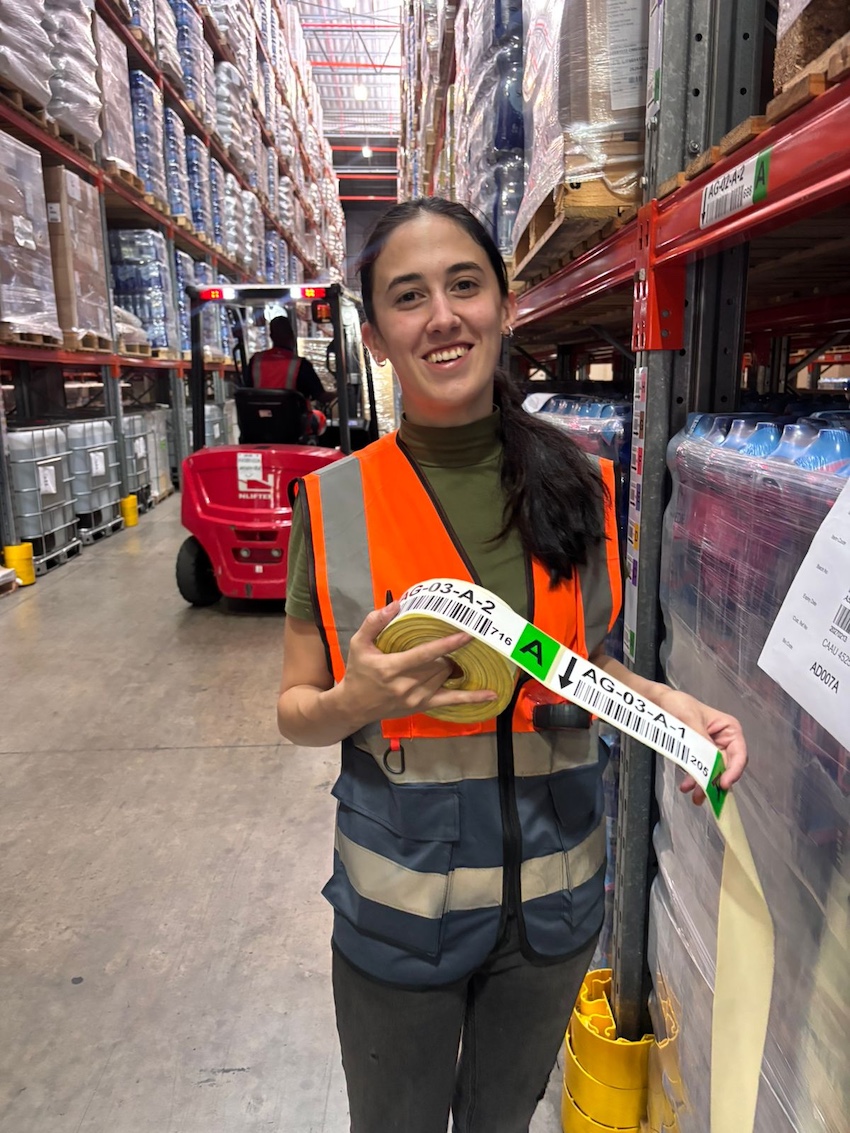
- rack and bin labels
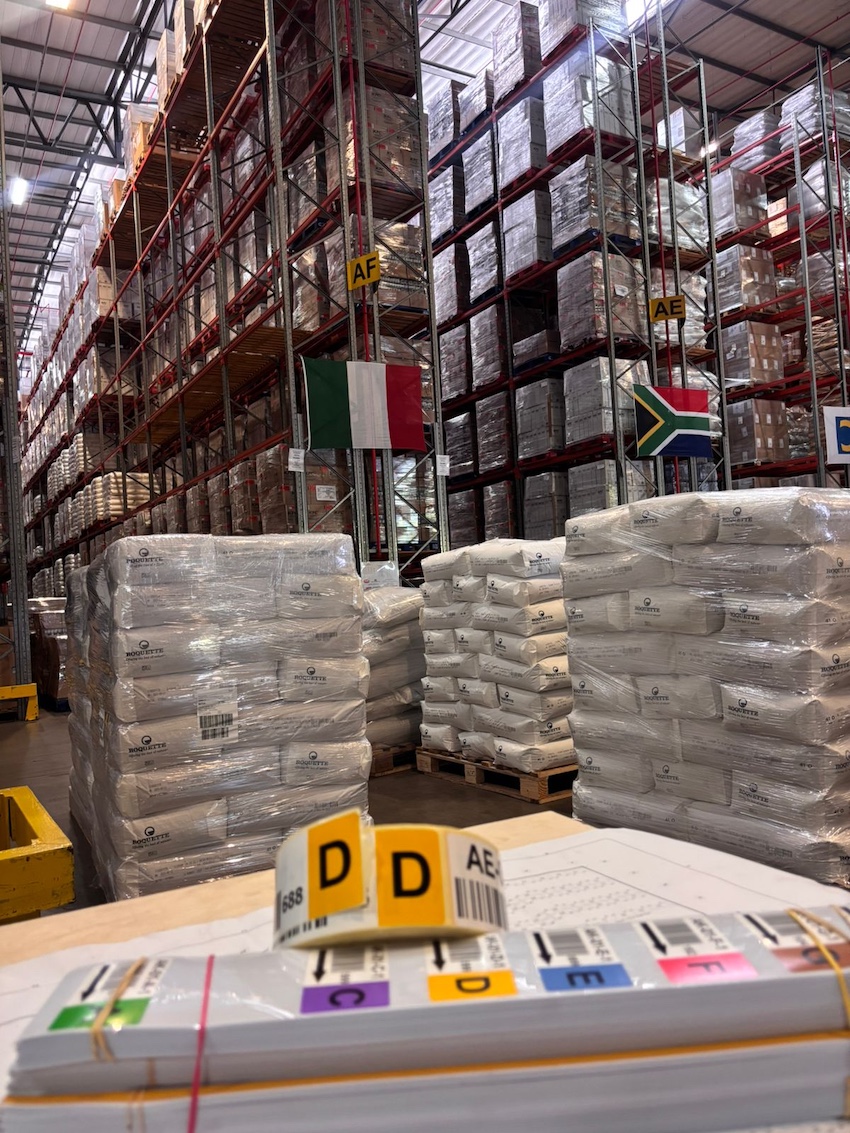
- row end and overhead signs
- floor markings and staging zones
- operational, directional and safety signage
- drawings, procedures and training material
When the digital record and the physical warehouse speak the same language, teams can move with greater confidence and supervisors can identify errors more easily.
The Identification System Needs More Than Labels
Warehouse labels are essential, but they work best as part of a wider visual system. Each element answers a different operational question.
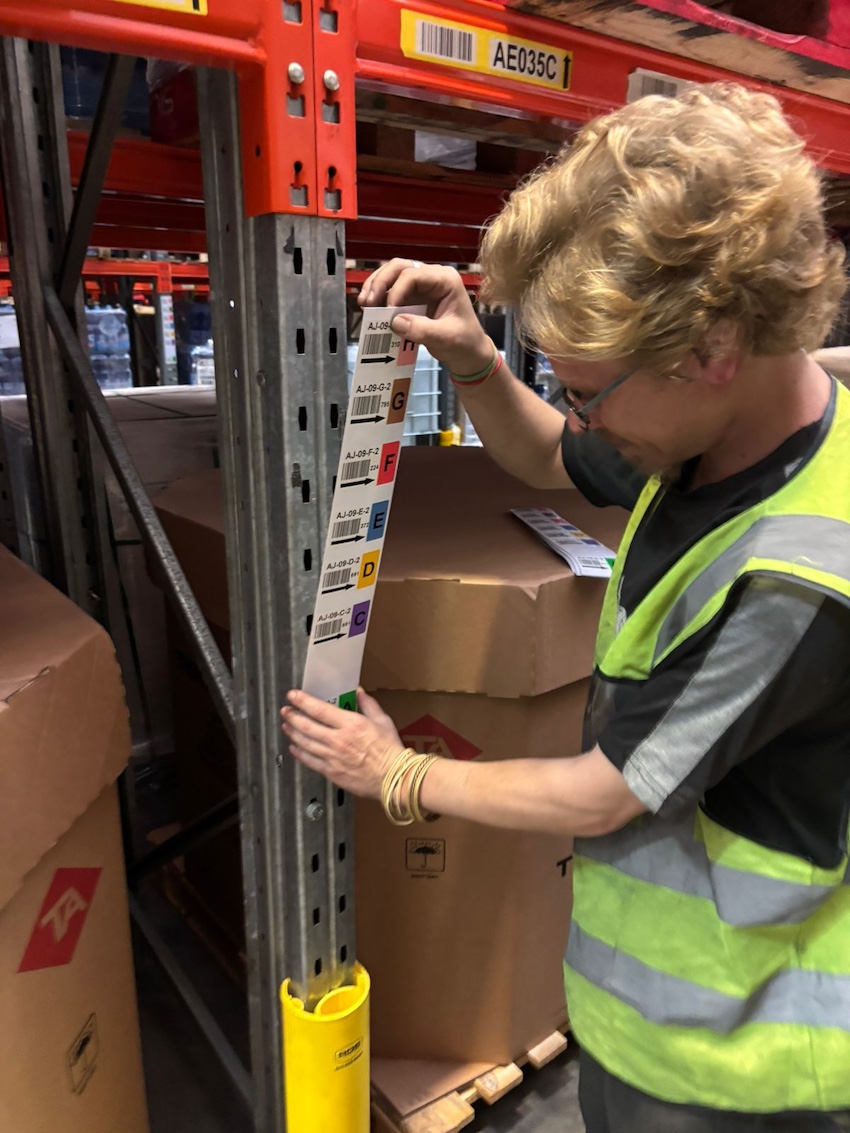
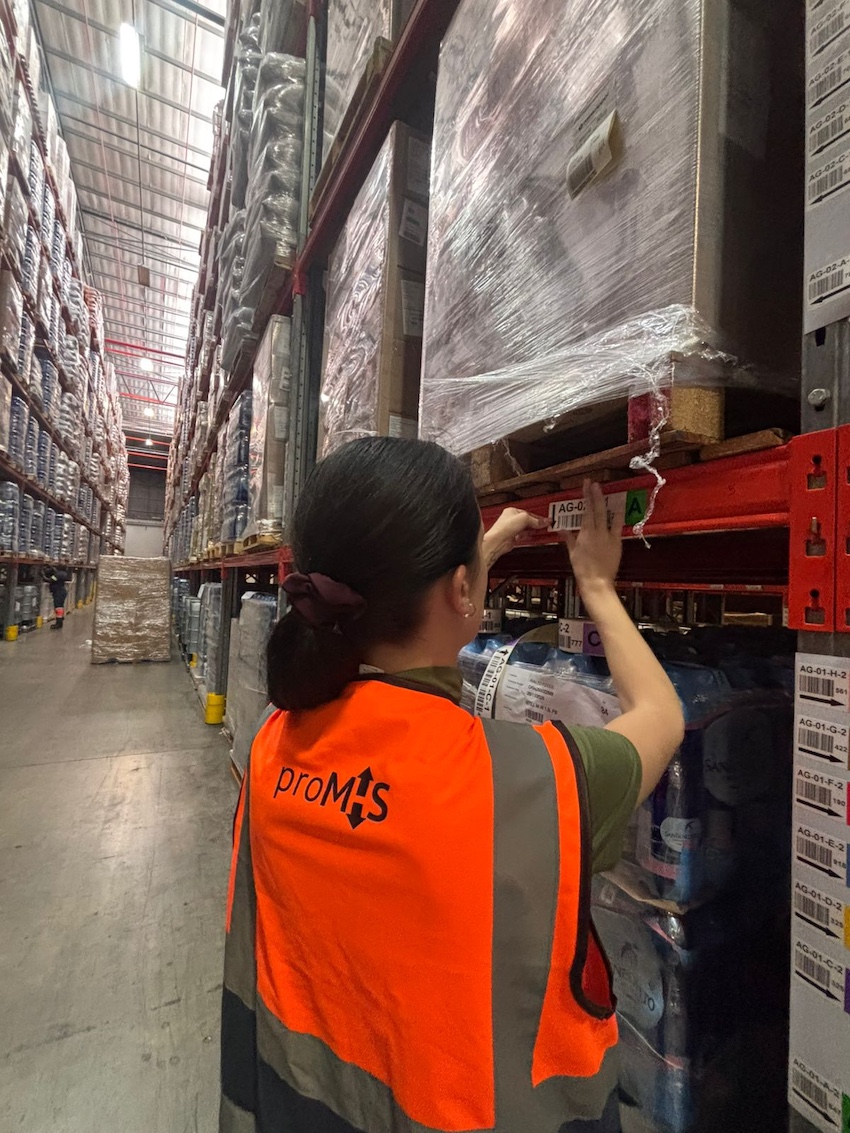
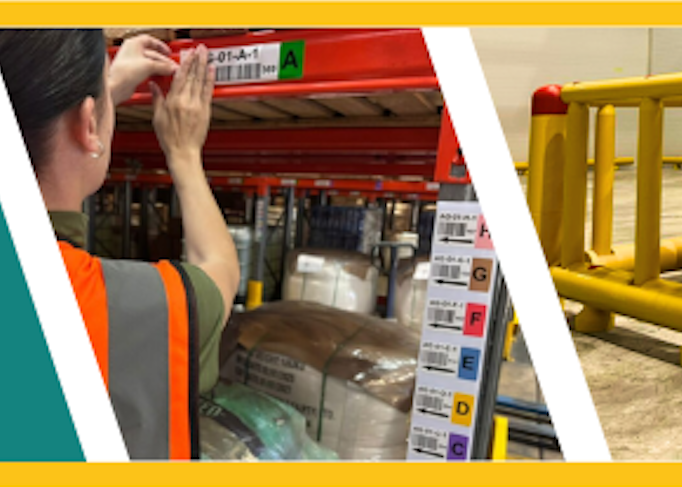
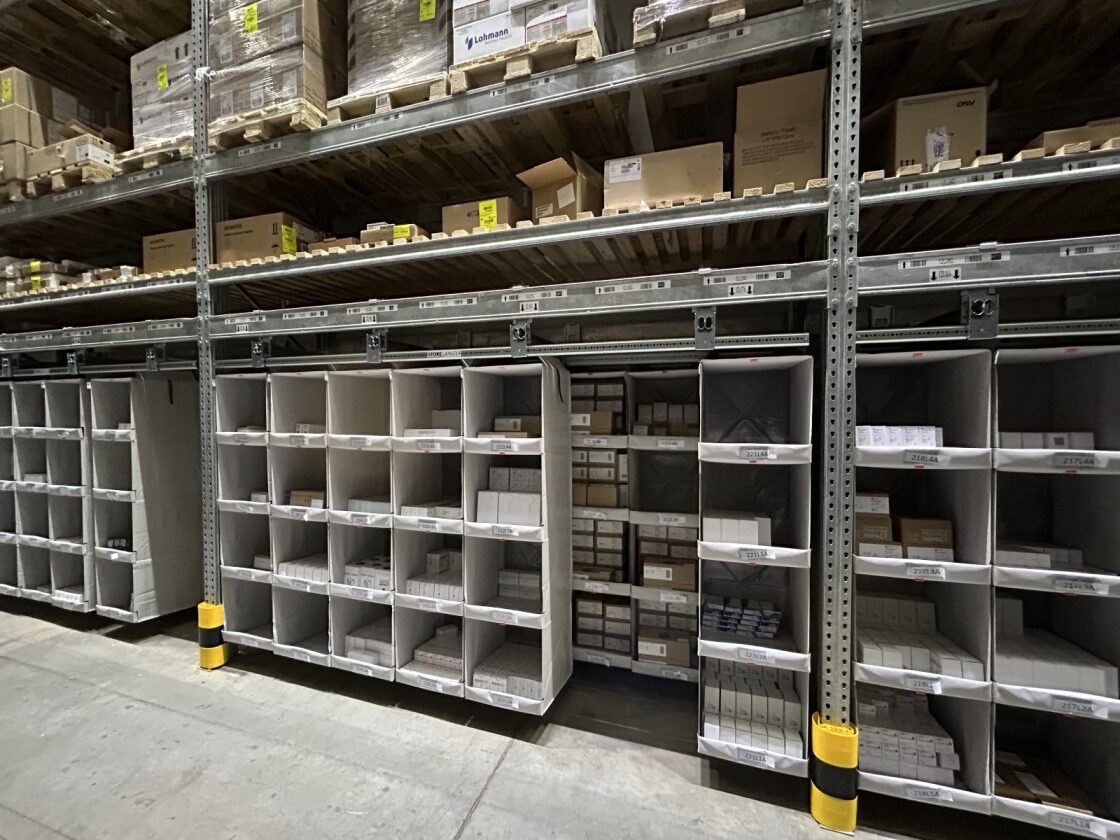
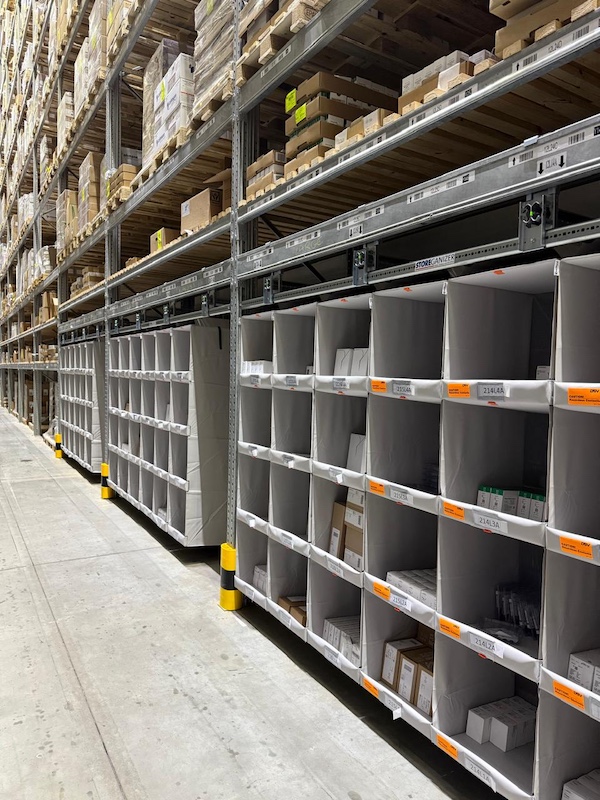
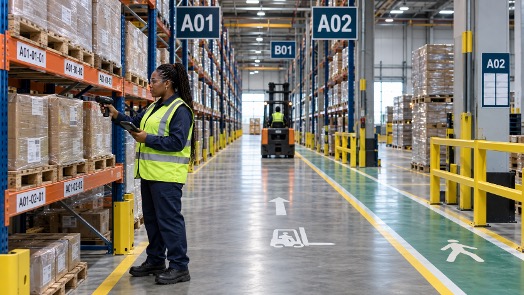
- Rack and location labels: identify the exact storage position and support accurate scanning, picking and put-away.
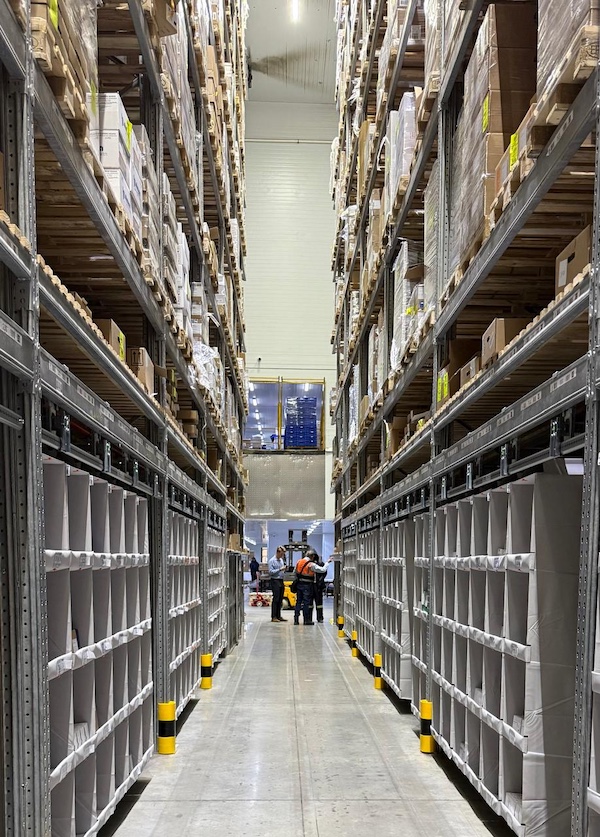
- Row end signs: help employees identify aisles and storage sections before they enter the row.
- Overhead and directional signs: provide long-range orientation across larger facilities and high-traffic areas.
- Floor markings: define walkways, vehicle routes, staging areas, holding zones and restricted spaces.
- Safety and operational signage: communicates rules and warnings at the point where a decision or action is required.
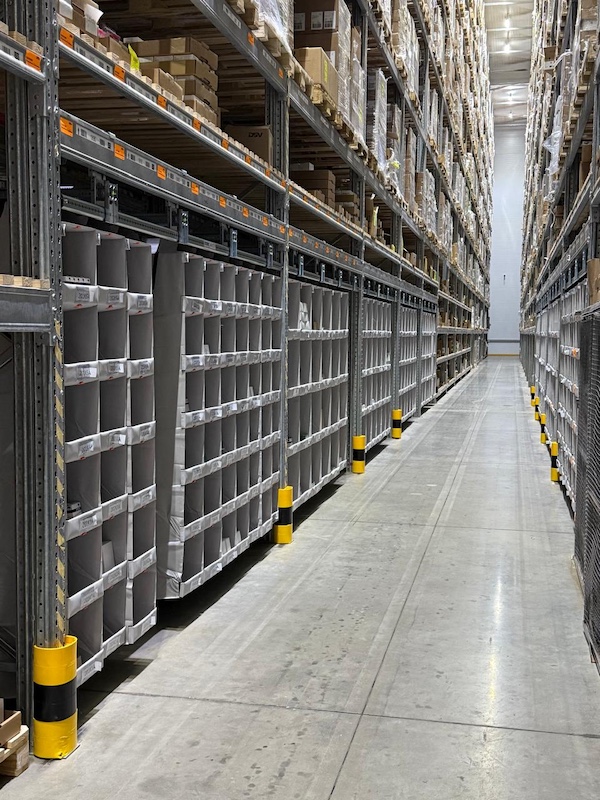
Visibility must be designed for the way the warehouse operates. A label that is clear at arm’s length may be unreadable from a forklift. A barcode may scan correctly in an office test but prove difficult to reach or scan at the actual location. A row end sign may look suitable on a drawing but disappear behind equipment or stock once the operation is live.
Material selection also matters. Labels and signs should suit the surface, viewing distance, light conditions, cleaning routines and environmental exposure in the area where they will be used.
Introducing DURABLE Magnetic Labelling Solutions
ProMHS has partnered with DURABLE to extend its warehouse identification offering with a practical range of magnetic labelling solutions for metallic surfaces such as warehouse shelving, racking and metal containers.
DURABLE’s magnetic label holders, document pockets and aisle signs provide secure, repositionable identification on metal surfaces. Insert labels can be exchanged quickly, selected options help protect the information from dust and soiling, and scanner-compatible formats support barcode workflows. Because the holders can be moved when stock profiles or layouts change, teams can update locations without removing adhesive labels or replacing permanent signs.
ProMHS can incorporate the DURABLE range into the wider identification plan, ensuring the label format, viewing distance, barcode requirements and placement work with the facility’s location structure and daily operation.
Build the System Around Real Warehouse Movement
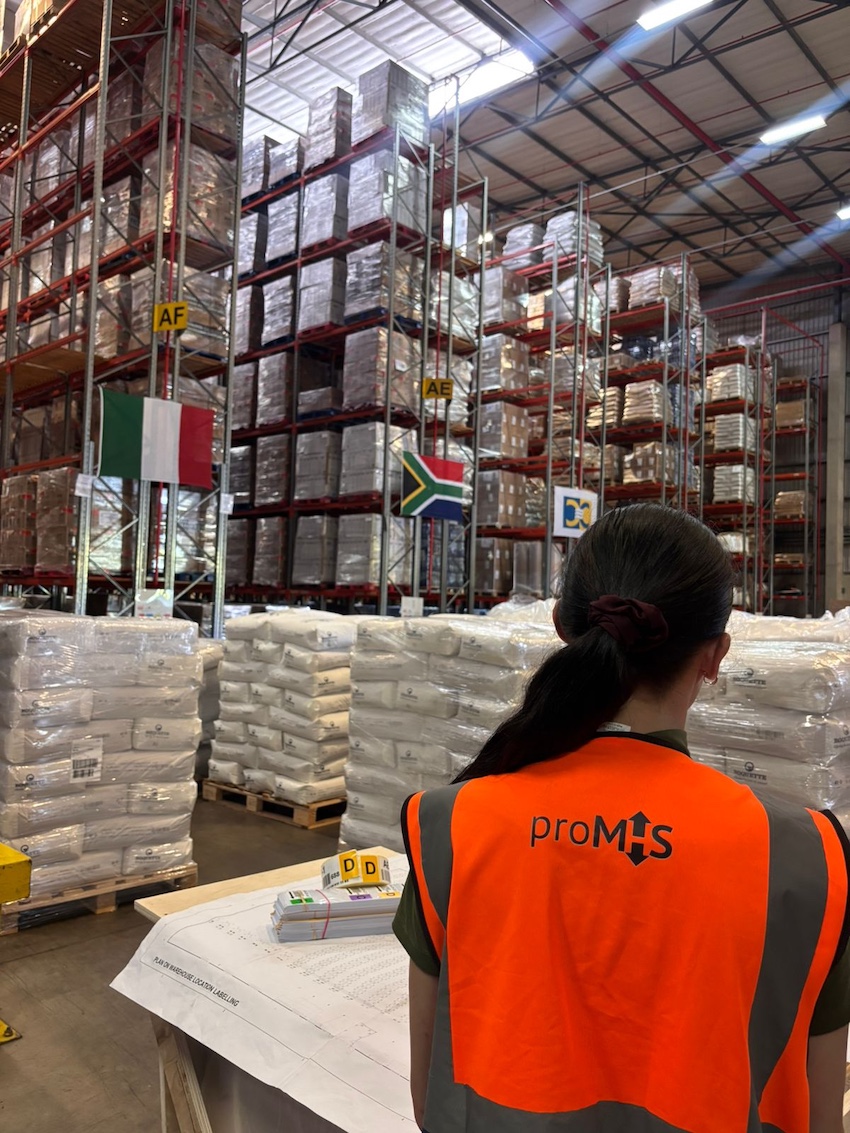
The strongest identification projects start on the warehouse floor. Before anything is printed or installed, the project team should understand how stock, people and material-handling equipment move through the facility.
A practical planning process should include:
- reviewing the layout, storage media, zones and current location structure
- mapping picking, replenishment, receiving, dispatch and returns workflows
- checking the location database for duplicates, gaps and inconsistent formats
- confirming label sizes, colours, materials, barcode requirements and viewing distances
- planning row end signs, directional signs, floor markings and safety information as one system
- testing samples in the actual operating environment before full production
- scheduling installation around operational demands and access restrictions
This approach prevents a common problem: producing attractive labels that do not solve the operational issue. The design should support the work, not force the work to adapt to the design.
“Clear identification gives people confidence in every movement. When the physical warehouse and its data speak the same language, teams spend less time searching, correcting and asking for directions, and more time moving stock accurately.”
Iain Sherwood, Director, ProMHS
Plan Installation Without Losing Control
Installation is where the database, printed material and physical warehouse come together. It requires more than applying labels in sequence. Access, safety, stock movement, working heights, equipment availability and shift patterns all affect the programme.
Good project management should confirm which areas are ready, how locations will be checked, who will approve completed sections and how exceptions will be recorded. This creates a clear handover and reduces the chance of a label being installed in the wrong position or an unrecorded change causing problems later.
For busy or live warehouses, a phased installation can help maintain control. Zones can be prepared, installed, verified and released in a planned sequence, with the location data updated alongside the physical work.
Keep the System Accurate After Go Live
Warehouse identification is operational infrastructure. It needs ownership and maintenance as the facility changes.
A simple maintenance process should cover damaged or missing labels, changes to rack layouts, new storage zones, temporary locations, revised traffic routes and updated safety requirements. Changes should be reflected in both the location database and the physical warehouse, with old signs and markings removed where they could cause confusion.
Regular visual checks can be built into routine warehouse inspections. The aim is to identify deterioration before it starts affecting accuracy or navigation.
A Practical Warehouse Identification Audit
Walk through the facility as though you are a new employee, contractor or driver. Then ask:
- Can someone identify the correct zone and aisle without asking for directions?
- Do all location labels follow the same naming structure and visual format?
- Can labels and barcodes be read or scanned from the normal operating position?
- Are row end signs visible before a person or vehicle enters the aisle?
- Do floor markings still reflect the current routes, staging areas and restricted zones?
- Is safety and operational information placed where the decision is made?
- Does the physical identification match the warehouse management system and location database?
- Are damaged, outdated or temporary labels creating mixed messages?
- Is there a defined process for approving and recording future changes?
If several answers are uncertain, the warehouse may have an identification problem even if the team has learned to work around it.
Create a Warehouse People Can Read
ProMHS provides a one-stop warehouse identification service that combines practical materials-handling experience with in-house location label design, printing and application. The service can include warehouse labels, durable magnetic labelling solutions, row end signs, warehouse signage, floor marking, database support, project management and installation.
With more than 35 years of consulting and project engineering experience behind the team, ProMHS approaches identification as part of the wider warehouse operation. The objective is a clear system that supports the way people receive, store, pick and move stock.
A well-organised warehouse starts with clear identification. If your team is spending too much time searching, checking or correcting locations, the physical warehouse may be telling you where the next improvement is needed.
Book a warehouse identification assessment with ProMHS.
Call 010 447 3520 | Email enquiries@promhs.co.za | Visit www.promhs.co.za/contact-us
ProMHS – We keep you moving forward!